Fresh off the fall conference circuit, the Stok team shares the latest insights on data center development and the challenges we face in meeting this moment.
From Fortune 500s and start-ups at Trellis VERGE, to corporate real estate leaders at CoreNet Global Summit, to our sustainability community at Greenbuild, one topic seemed to dominate every stage this fall: data centers.
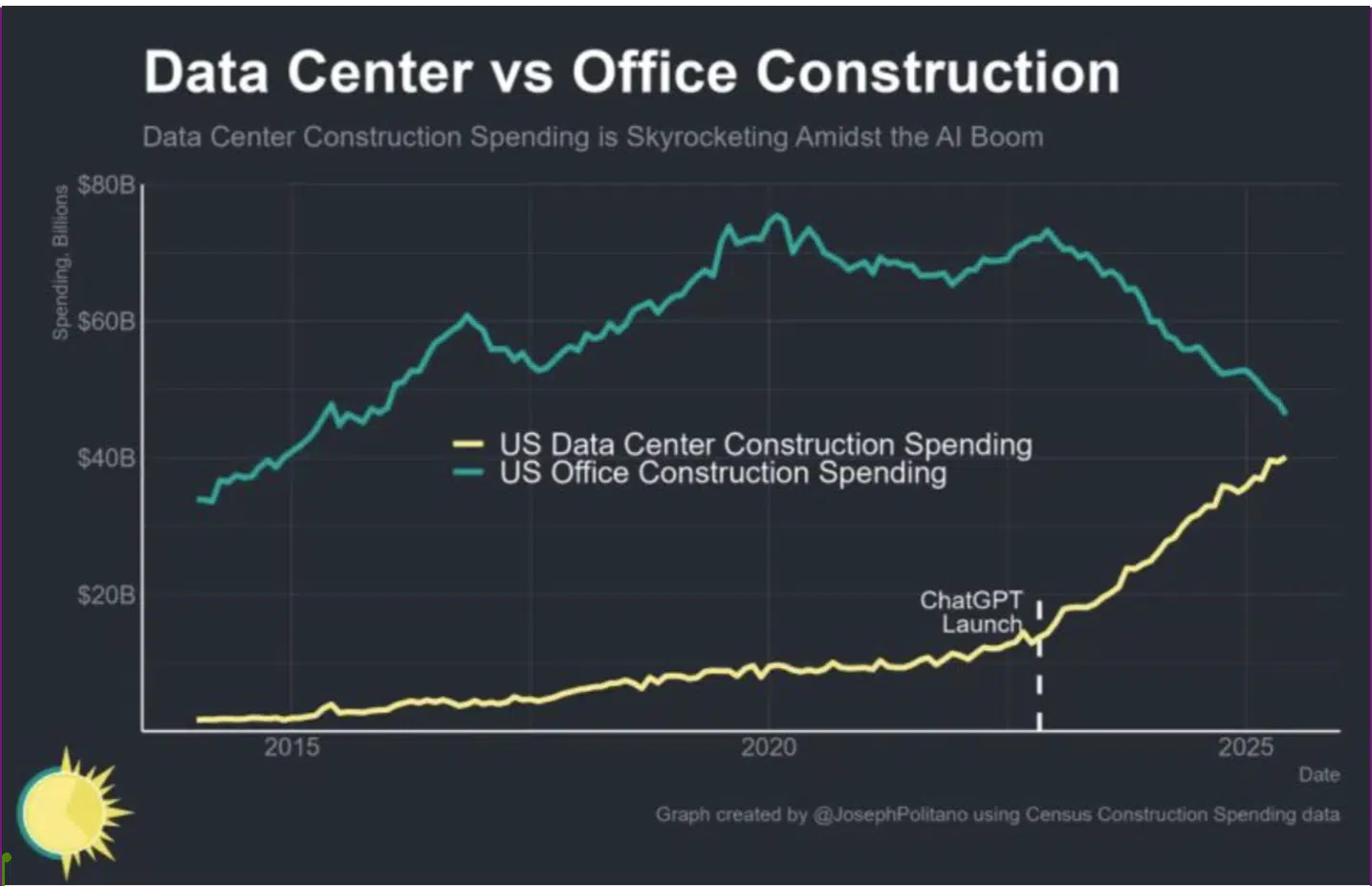
That shouldn’t come as a surprise. We are now building more data centers than commercial buildings, and spending on data center construction is up 190% since the launch of ChatGPT in 2022.
So what challenges (and opportunities) does this boom present? Here are some key takeaways shaping this year of data center and AI infrastructure:
#1: Investment in innovation is accelerating. For hyperscalers, this is a gold rush moment. The global data center industry is projected to grow from 55 GW to 140+ GW by 2029 (nearly 3x growth in 4 years!). Capital is flowing rapidly, and with it comes ideas and experimentation that still sound like science fiction (have you heard about AI data centers in space yet?).
#2: Speed and schedule are paramount. Data center developers are focused on constructing as quickly as possible. Large-scale data centers face major labor, supply chain, and equipment lead-time constraints, posing potential impacts to schedule. If sustainability strategies introduce schedule or cost implications, teams may pivot to approaches that protect delivery deadlines, even if those alternatives have less sustainability benefit.
#3: Data center specific sustainability fluency is essential. Data centers aren’t just bigger or more remote commercial buildings. Their unique scale, loads, mission critical redundancy requirements, cooling strategies, and operational profiles require tailored sustainability approaches. Applying the same sustainability strategies that we use for commercial office buildings, while a good start, will only get us so far. Designers, builders, and developers need deep fluency across data center disciplines to develop and implement data center specific sustainability strategies that meaningfully reduce environmental impact.
#4: Certifications are gaining traction and delivering value. At Greenbuild, USGBC announced that more than 1,000 data centers are already registered under the LEED framework, a notable shift from prior years. Data center development is moving so rapidly that without a solid framework and foundation for sustainability, it could be deprioritized. Certifications like LEED provide developers with existing frameworks for proven strategies that can be quickly customized to meet project needs.
Stok has seen this momentum grow over the years. We’ve guided a hyperscaler in pursuing LEED certification across more than 7 million SF of U.S. projects, and we’re currently partnering with a rapidly growing global developer and operator of large-scale data center campuses to achieve LEED certification across more than 2 million SF of U.S. projects, delivering certified cost-effective energy performance, embodied carbon reductions, and flexible, scalable data centers.
#5: Corporate sustainability commitments shape data center strategy. Hyperscalers with portfolio-level or value-chain decarbonization targets are applying those expectations to their data centers as well. This can mean pursuing higher certifications, prioritizing embodied carbon reductions, or piloting advanced low-carbon materials. We’ve seen this firsthand, supporting a hyperscaler in developing a custom Data Center Design and Construction Sustainability Standard aligned with their corporate commitments to net zero, emissions reduction, waste reduction, biodiversity enhancement, and water use reduction. These organizations are proving that it’s possible to push for speed-to-market while still signaling industry leadership on climate commitments.
WHERE DOES THAT LEAVE US?
Across all conferences, the message was clear: we’re facing significant challenges in data center development and operations in the age of GenAI. The good news is that solving problems is what sustainability consultants do. Growth at this scale brings new opportunities to innovate, lead, and define what the future of AI infrastructure will look like. We don’t have all the answers yet, but we’re pushing toward finding them.
How are you innovating in the data center space? We’d love to hear your perspectives, pain points, and ambitions. Reach out!