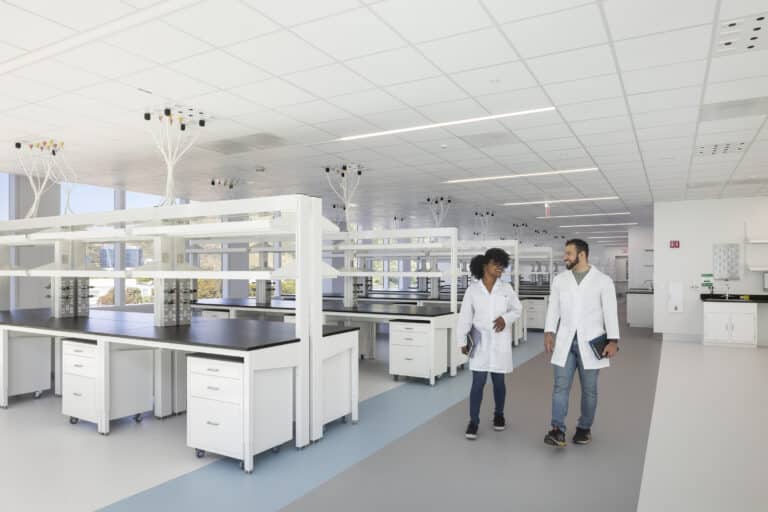
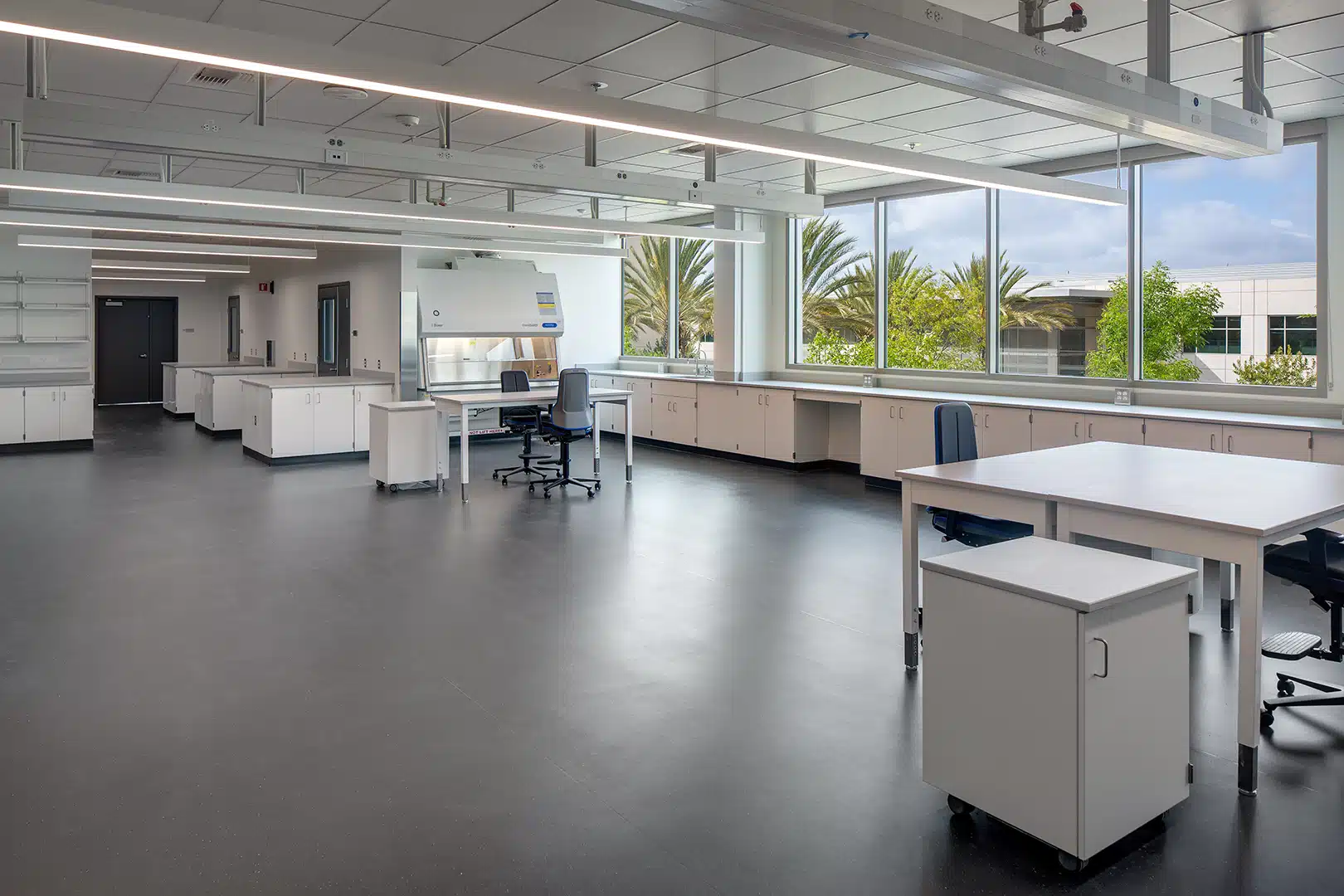
Aiming to deliver a critical health facility that balanced complex laboratory requirements with bold sustainability targets, the County of San Diego engaged Stok to lead sustainability efforts from design through occupancy.
At a Glance

County of San Diego

San Diego, CA

Life Science

52,000 SF
County of San Diego (Client & Owner)Steinberg Hart (Architect)BnBuilders (General Contractor)

LEED v4 BD+C Platinum

- LEED & ZNE Energy Modeling
- Monitoring-Based Commissioning (MBCx)
- Embodied Carbon Consulting
The Challenge
-
Design: Guided energy efficiency goals, PV and battery sizing, embodied carbon reduction strategies, and end-use submetering to support ongoing monitoring.
-
Construction: Supported procurement of low-carbon materials and oversaw integration of submeters into the County’s Building Automation System (BAS).
-
Operations: Continuing to monitor actual energy and water performance to verify the building operates as designed.


Colleen FitzSimons
“Stok’s proactive coordination with the design and construction teams enabled us to certify this laboratory building LEED Platinum. Stok’s hands-on approach was instrumental in elevating the overall sustainability goals including ensuring low-carbon materials were sourced effectively. Stok’s diligence in validating submeter data and its integration into our building automation system has resulted in high-quality performance tracking. Stok continues to be a trusted partner in advancing the County’s sustainability commitments.”
By the Numbers

Predicted annual energy cost savings (excluding renewable energy)
$99,000

Water reduction below baseline for irrigation and 40% reduction for indoor use
67%

Of construction waste diverted
88%

Reduction in embodied carbon (598 MTCO2e)
23%
The Solution
EMBODIED CARBON LEADERSHIP
To advance the County’s decarbonization goals, Stok modeled embodied carbon impacts through a Whole Building Life Cycle Assessment (WBLCA) from schematic design through completion, guiding the team in making data-driven material decisions within the lab’s stringent design parameters. While supplemental structural optimization strategies such as hybrid steel/timber framing were evaluated, they were ultimately not feasible due to the lab facility’s strict vibration requirements for microscope use. Despite the non-negotiable lab design constraints, the project achieved a 23% embodied carbon reduction through:
-
- Conducting an iterative WBLCA approach early in design to identify and evaluate optimization opportunities.
-
- Establishing low-carbon material guidelines and facilitating workshops to determine the County’s materials sourcing pathway.
-
- Collaborating with County project management, the design team, and the GC to align submittals with reduction targets and updating the WBLCA with as-built data to verify reductions.
PUSHING FOR PERFORMANCE
While net zero energy was not feasible for this laboratory facility, the project advanced the County’s decarbonization goals through an all-electric design. Sized by Stok, onsite and nearby County-owned solar arrays are predicted to generate 805,000 kWh annually—offsetting 44% of the building’s energy use—supported by a rooftop battery system that reduces peak demand stress on the grid and reduces peak demand charges for the County.
ONGOING PERFORMANCE MONITORING
To deliver on design intent and inform continuous improvement for the PHL, Stok developed end-use submetering strategies, oversaw submeter integration into the County’s Building Automation System (BAS) during construction, and now continues to track actual energy and water use in operations.


Tait Nelson
“Stok was an instrumental partner to the County of San Diego on the Public Health Laboratory project. Because the exterior materials had to match or be similar to the existing campus standards, achieving the embodied carbon goal was especially challenging. Stok identified viable low-carbon material options that met both performance and aesthetic requirements, enabling the team to incorporate them into the design. Their deep understanding of the County's sustainability priorities and technical expertise greatly streamlined the process and helped advance project goals with confidence.”
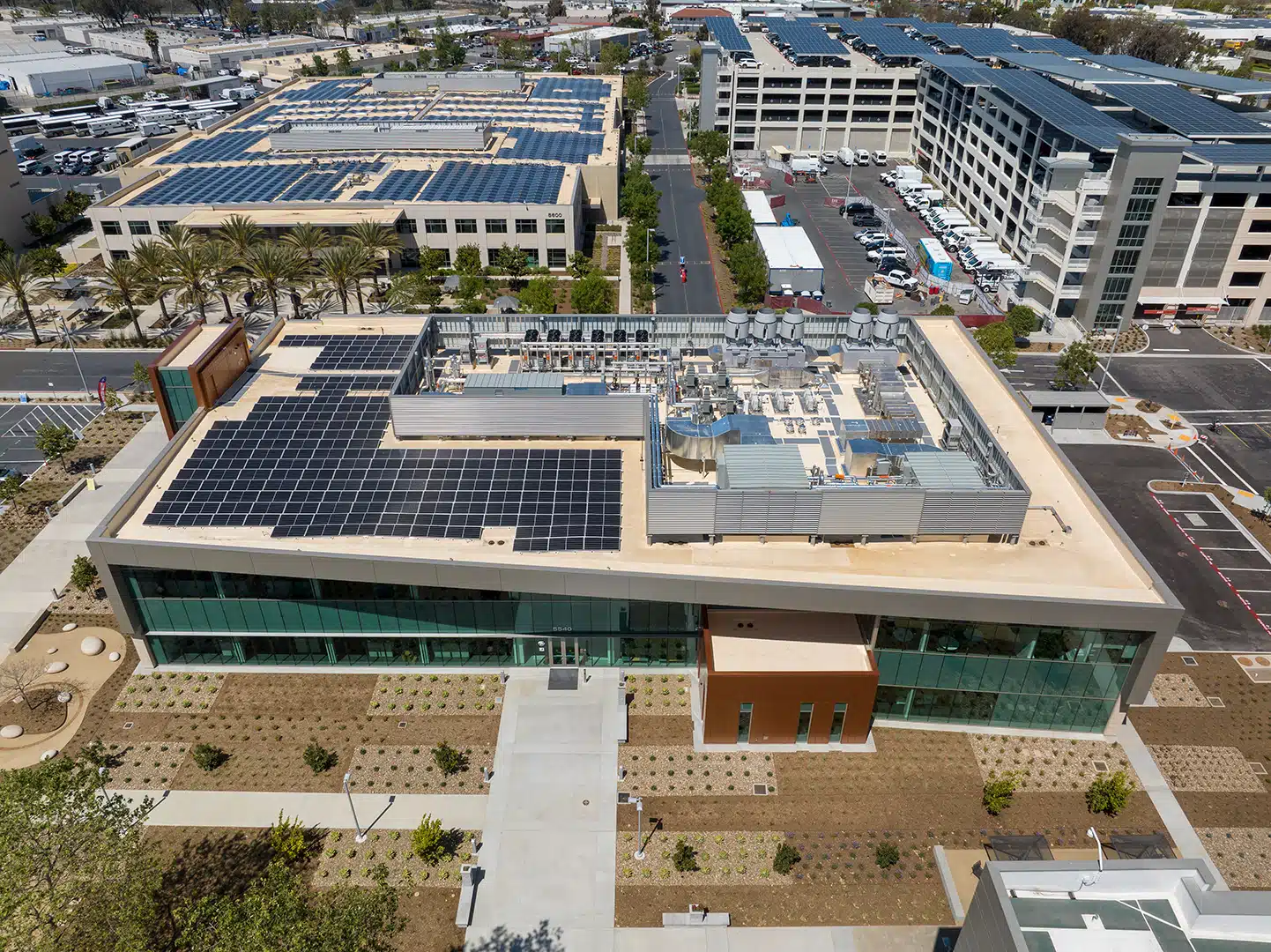
Photo credit: Brady Architectural Photography