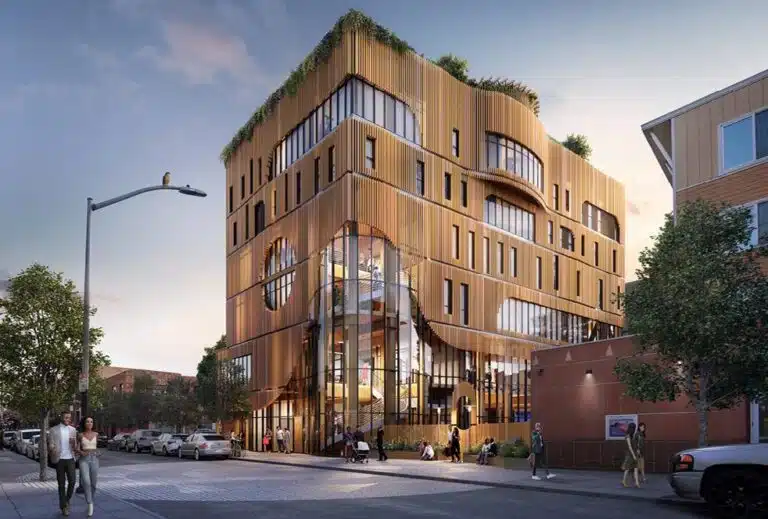
Boyle Street urgently needed a new drop-in facility that could provide safety, connection, and coordinated support services for some of the city’s most vulnerable residents. As a charitable organization, minimizing long-term operating costs was critical to keeping resources focused on community services rather than building operations. The organization also sought a building that would be robust and resilient enough to serve high daily volumes while remaining welcoming and respectful of users’ lived experiences. At the same time, the GICB grant created both an opportunity and a responsibility. Funding was tied to achieving total carbon reduction with the Zero Carbon Building-Design standard, requiring the project team to demonstrate measurable progress in design. Stok supported Boyle Street throughout the project lifecycle, helping the owner seamlessly navigate funding needs, sustainability targets, and certification processes on a fast opening timeline.
At a Glance


- Zero Carbon Consulting
- Green and Inclusive Community Buildings (GICB) Grant Application
- CAGBC Zero Carbon Building Standard Certification Consulting
The Challenge
By the Numbers


The Solution
UNLOCKING CAPITAL THROUGH ZERO CARBON BUILDING CERTIFICATION
Stok facilitated the GICB grant application, helping the owner secure millions in capital funding tied to achieving CAGBC ZCB-Design certification. By translating technical performance requirements into a compelling narrative, the team demonstrated how the project would deliver both environmental and social impact. Framing high-performance design as a pathway to long-term service delivery resilience for building users helped align sustainability goals with Boyle Street’s mission-driven priorities. This early alignment between funding and sustainability goals enabled the project to move forward and established a strong foundation for meeting its carbon reduction goals.
STREAMLINING CERTIFICATION THROUGH PROACTIVE COORDINATION
Acting as a central sustainability hub, Stok worked closely with the owner, design consultants, and contractor to track progress, manage documentation, and maintain momentum toward CAGBC ZCB-Design certification. This enabled all certification requirements to be completed in time for building occupancy, allowing Boyle Street to open the facility as planned and begin serving community members in need as soon as possible. The coordinated delivery model reflected the building’s interdisciplinary care approach, bringing diverse expertise together to support both building performance and human outcomes.
MAINTAINING FLEXIBILITY WHILE PROTECTING PERFORMANCE OUTCOMES
The CAGBC ZCB certification framework allowed the team to address challenges without compromising the project’s long-term goals. Late in design, the discovery of a small gas-powered kitchen appliance created a potential barrier to certification. Rather than abandoning the zero-carbon target, the team evaluated options and ultimately chose to remove the equipment. This decision minimized redesign effort while reinforcing the owner’s commitment to eliminating on-site combustion and achieving the intended performance outcomes, enabling the facility to provide healthy, comfortable indoor environments for staff and visitors over the long term.
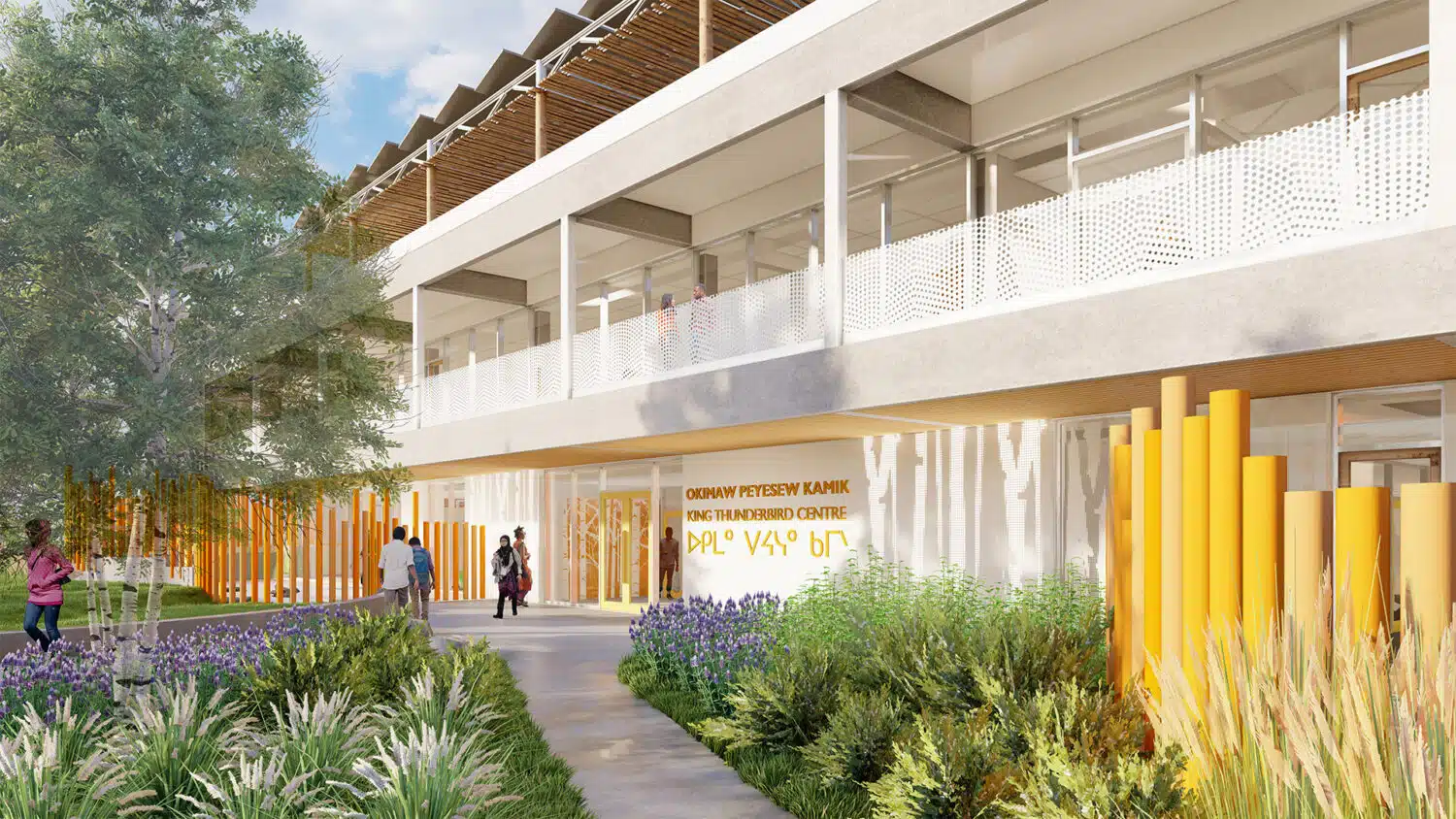
Renderings courtesy of HSEA Architecture